New Agroecology Leaders Ready to Transform South Africa’s Food Systems

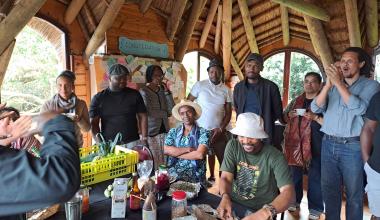
After an intensive nine-month learning journey, the Agroecology and Organic Leadership Course (AOLC) South Africa cohort gathered in Cape Town from 26 –29 May 2026. The gathering celebrated their graduation and provided a platform to showcase their visions for a more resilient, sustainable, and locally owned food system.
This second face-to-face session marked the culmination of a programme designed to bridge the gap between organic and agroecology principles and practical on-the-ground leadership. The event brought together 23 graduates to share their development plans and analyse how to embed and strategize their initiatives at the national and sub-national level.
From Vision to Action: The Development Plans
The heart of the three-day graduation was the evaluation of participants’ Personal Development Plans (DPs). These plans serve as strategic roadmaps for implementing systemic agroecological change within their respective communities.
All 23 participants introduced their unique DPs through detailed presentations that reflected both their personal growth and the broader systemic impact of their work. To ensure these plans were robust and actionable, a comprehensive peer-review process was conducted based on three core leadership pillars:
- Systems-Level Thinking: Evaluating how each plan engages with food-system dynamics to connect local actions to a broader context.
- Transformative Impact: Assessing the extent to which the plan addresses the root causes of agricultural challenges to foster long-term change.
- Collaborative Leadership: Measuring how effectively the leader fosters collective action, shared learning, and inclusivity within their community.
Top Development Plans from the Cohort
Following rigorous rounds of peer and expert review, four of the 23 Development Plans stood out for their exceptional design and potential impact:

In the two-year plan, he expects to expand agroecological practices across rural South Coast communities through capacity building, community engagement, and sustainable farming initiatives.

Her DP focuses on supporting farmers and community members in transitioning to sustainable farming practices, improving market readiness, and establishing backyard gardens to strengthen household food security.

This pilot initiative seeks to develop a biodistrict model to strengthen local organic production, collaboration, and sustainable territorial development.

This plan sets out to establish a community hub integrated with the Agroecology Training Academy (ATA) to provide training, knowledge exchange, and practical learning opportunities in agroecology and permaculture.


A New Chapter for Agroecology & Organic Leadership
Beyond marking the successful conclusion of the nine-month AOLC programme, the graduation offered participants valuable opportunities to network with key organic stakeholders. A particular highlight was their participation in the Good Life Show in Cape Town, which allowed the graduates to connect directly with businesses and initiatives across the organic and sustainable food sector.
While the AOLC South Africa has drawn to a close in Cape Town, the real impact of these change agents is just beginning to take root. Equipped with advanced skills in leadership, systems thinking, stakeholder engagement and change management, these graduates now serve as vital links in an Africa-wide and global network dedicated to promoting Agroecology and the Principles of Organic Agriculture.
By championing localised, systemic interventions, the cohort is elevating leadership across South Africa’s organic sector and agroecology. Their efforts will ensure that agroecology plays a central role in shaping the country’s future food security and better nutrition outcomes.